
Stages of Development in the Early Years: What Every Caregiver Should Know
- Networx

- Apr 24
- 2 min read

Understanding how children grow and develop in the early years is essential for anyone working in early childhood education. From birth to age five, children experience rapid changes across multiple areas of development. These stages provide a roadmap that helps caregivers, teachers, and families support children in meaningful and developmentally appropriate ways.
Why Developmental Stages Matter
Every child develops at their own pace, but there are general milestones that most children reach within certain age ranges. Understanding these stages helps you:
Plan appropriate learning experiences
Identify potential developmental delays early
Set realistic expectations
Build stronger relationships with children
Support whole-child development
When caregivers understand development, they respond instead of react—and that makes all the difference.
The Four Key Areas of Development
Before diving into stages, it’s important to recognize the four main domains of early childhood development:
Physical Development (gross and fine motor skills)
Cognitive Development (thinking, problem-solving)
Language Development (communication and understanding)
Social-Emotional Development (relationships, self-regulation)
All four areas are interconnected. Growth in one area often supports growth in another.
Stage 1: Infancy (Birth to 12 Months)
This stage is all about trust, bonding, and exploration through the senses.
Key Milestones:
Lifts head, rolls over, begins crawling
Recognizes familiar faces
Responds to sounds and voices
Begins babbling and making sounds
What Caregivers Can Do:
Provide consistent, responsive care
Talk, sing, and read to the baby
Offer safe spaces for movement and exploration
Build strong emotional connections
Stage 2: Toddlerhood (1 to 3 Years)
Toddlers are discovering independence and self-expression.
Key Milestones:
Walks, runs, and climbs
Uses simple words and short sentences
Shows strong emotions (tantrums are common)
Begins to imitate adults and peers
What Caregivers Can Do:
Encourage independence with simple choices
Use simple language and repetition
Support emotional development with patience
Provide structured routines
Stage 3: Preschool (3 to 5 Years)
Preschoolers are developing social skills, creativity, and early learning foundations.
Key Milestones:
Engages in cooperative play
Speaks in full sentences
Begins recognizing letters, numbers, and shapes
Develops problem-solving skills
What Caregivers Can Do:
Provide opportunities for group play
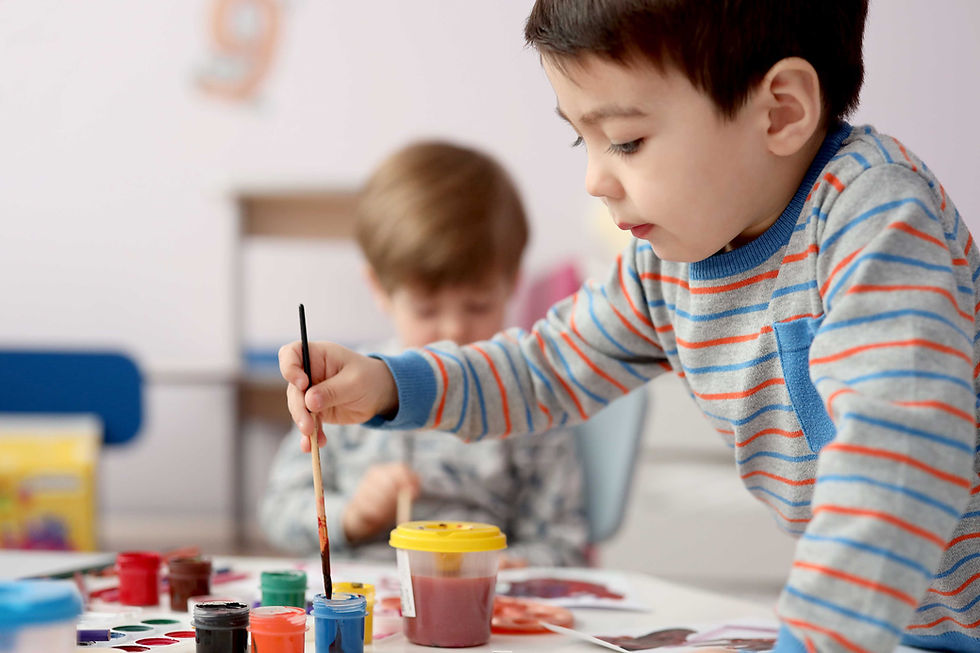
Encourage creativity through art and dramatic play
Introduce early literacy and math concepts
Guide positive social interactions
Understanding Developmental Differences
Not all children will reach milestones at the same time—and that’s okay. Development is influenced by:
Environment
Experiences
Culture
Individual temperament
However, consistent delays across multiple areas may signal the need for further evaluation. Early intervention can make a significant difference in a child’s long-term success.
Developmentally Appropriate Practice (DAP)
Using development as a guide leads to what we call Developmentally Appropriate Practice (DAP)—a key principle in early childhood education.
This means:
Meeting children where they are
Challenging them just enough to grow
Creating environments that support exploration and learning
Final Thoughts
The early years lay the foundation for a child’s future learning, behavior, and health. By understanding the stages of development, caregivers can create supportive environments where children feel safe, confident, and ready to learn.
When we truly understand development, we don’t rush children—we respect the process.
Want to Learn More?
At Networx Training Academy, we offer continuing education courses designed to help early childhood professionals deepen their understanding of child development and improve classroom practices.
👉 Explore courses: www.networxllc.net/ce


Comments